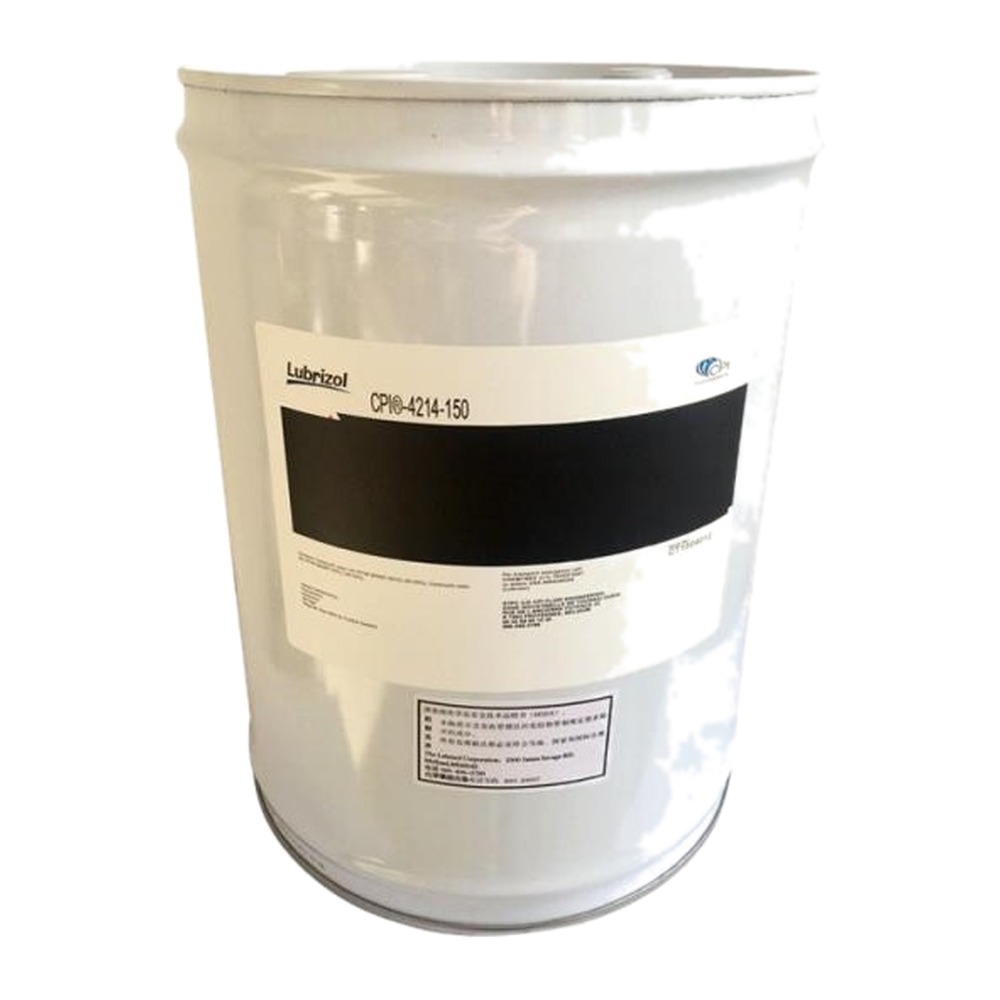
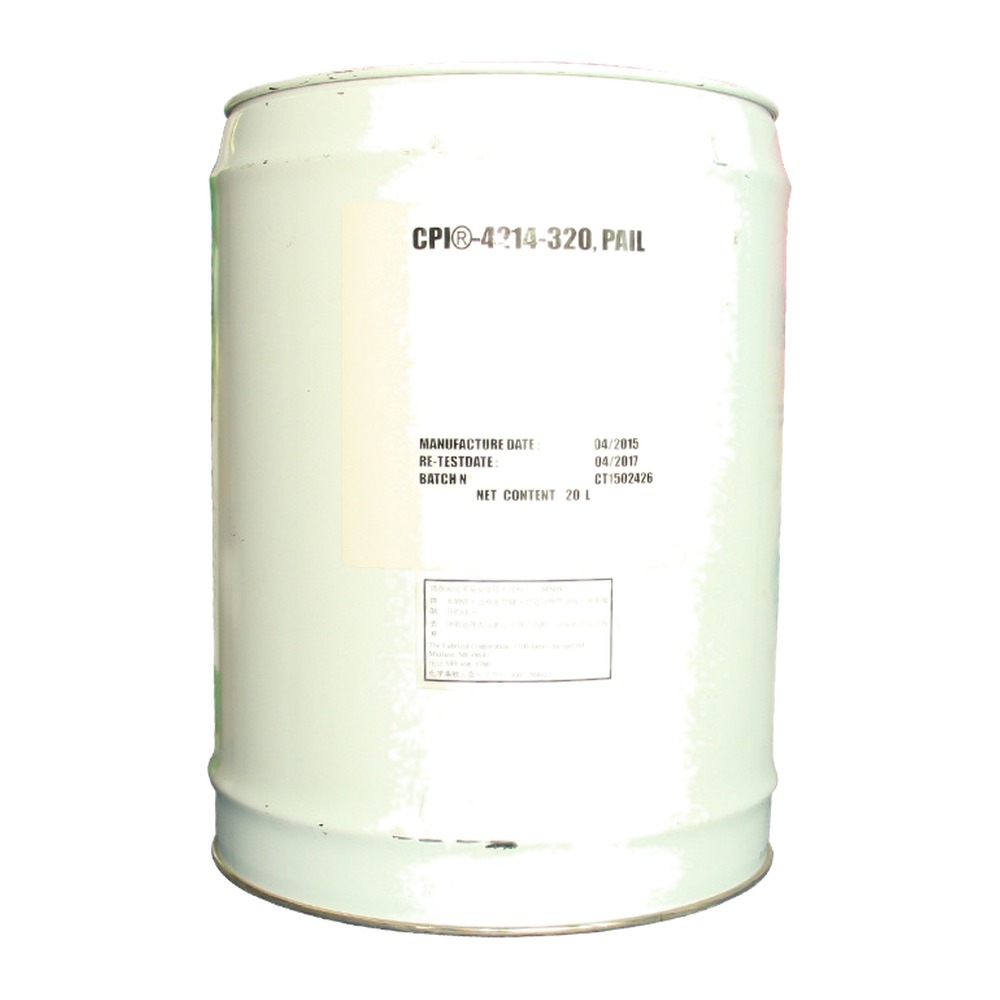
Three CPI CP-4214 grades are stocked here, and the numbers in their names are not the figures on their data sheets. The 85 grade measures 83.73 cSt at 40 °C. The 150 grade measures 168.0. The 320 grade measures 298 and lands inside VG 320, which makes it the only one of the three that sits in an ISO band at all.
| Grade | 40 °C | 100 °C | Viscosity index | Pour point | Flash point | Fire point |
|---|---|---|---|---|---|---|
| CP-4214-85 | 83.73 cSt | 12.50 cSt | 146 | −34 °C | 287 °C | 321 °C |
| CP-4214-150 | 168.0 cSt | 20.2 cSt | 150 | −43 °C | 290 °C | 332 °C |
| CP-4214-320 | 298 cSt | 32 cSt | 149 | −31.67 °C | 271 °C | 282 °C |
All three are synthetic polyol ester refrigeration compressor lubricants, and all three figures come from the technical data sheet with the test method named against each one.
The VG 68 band ends at 74.8 cSt and the VG 100 band starts at 90 cSt. CP-4214-85 measures 83.73 cSt, which is 8.93 cSt above the VG 68 ceiling of 74.8 and 6.27 cSt below the VG 100 floor of 90, so no ISO band contains it.
The name is close enough to the measurement to look like rounding, and that is the trap.
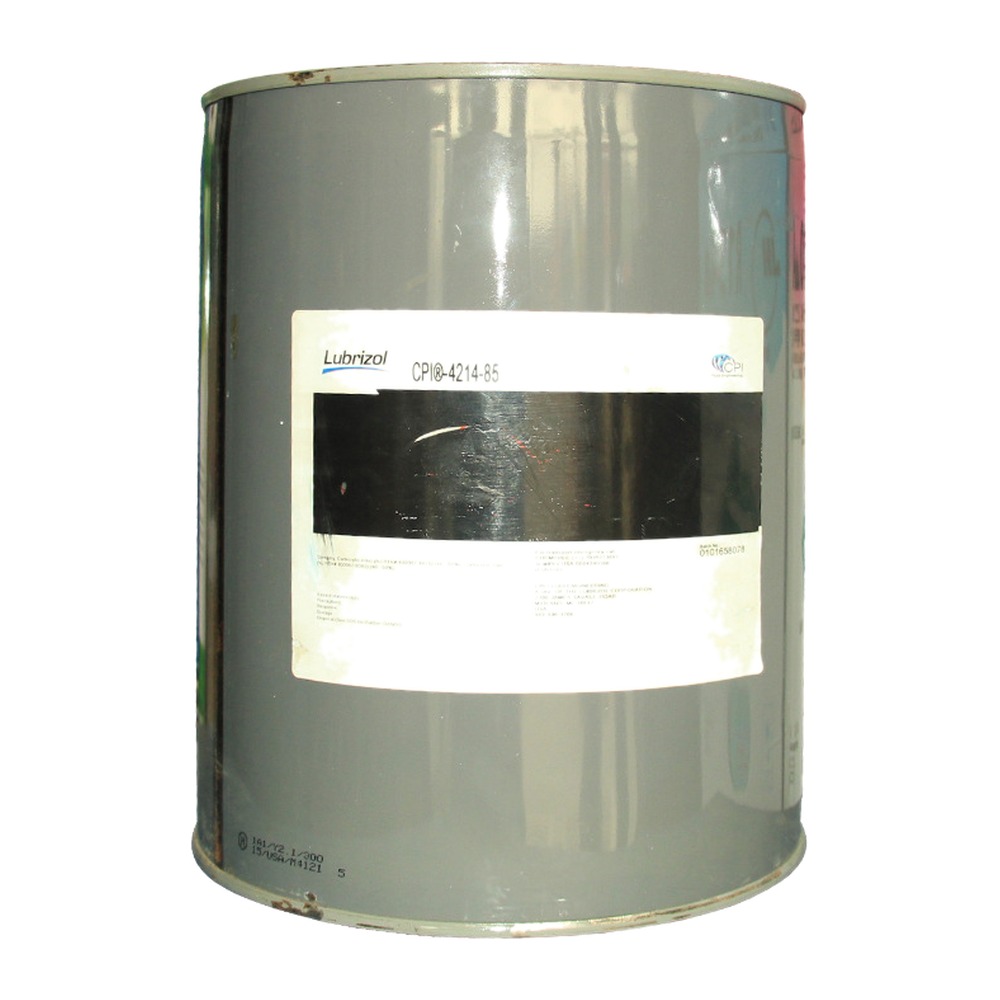
The pour point is −34 °C and the flash point 287 °C. The data sheet also publishes a fire point of 321 °C, 34 K above the flash.
CP-4214-150 measures 168.0 cSt, and the VG 150 band ends at 165 cSt. The grade is three centistokes above the class its name points at and thirty below the floor of VG 220 at 198 cSt, so it sits in the gap as well.
Of the two grades that fit no band, this one carries the bigger name gap: 18 cSt against 1.27 cSt on the 85 grade. A plant that substitutes a VG 150 fluid for this grade is running 3 cSt thinner than the data sheet, and a plant that substitutes VG 220 is running 30 cSt thicker.
The pour point is −43 °C, the lowest of the three, and the flash point 290 °C with a fire point of 332 °C.
CP-4214-320 measures 298 cSt. VG 320 runs from 288 to 352 cSt, so the measurement is 10 cSt above the floor and 54 below the ceiling. The name is 22 cSt above the measurement and still points at the right class.
Its pour point is −31.67 °C, the highest of the three, and its flash point 271 °C with a fire point of 282 °C. The 11 K between flash and fire is the narrowest of the three grades, against 34 K on the 85 and 42 K on the 150.
Each ISO 3448 class is the nominal viscosity plus or minus 10 percent. VG 68 covers 61.2 to 74.8 cSt, VG 100 covers 90 to 110, VG 150 covers 135 to 165, VG 220 covers 198 to 242. The nominal ladder steps by roughly a factor of 1.5 while each band is only 20 percent wide, so every pair of neighbours leaves an unprotected stretch between them.
Between VG 68 and VG 100 that stretch runs from 74.8 to 90, which is 15.2 cSt wide and wider than the 13.6 cSt the VG 68 band covers. Between VG 150 and VG 220 it runs from 165 to 198, 33 cSt wide, wider than the 30 cSt of VG 150 itself. A fluid measuring 83.73 cSt or 168.0 cSt therefore has no class to belong to, and the data sheet is not withholding one.
The two gaps are not equally wide. The 85 grade sits in 15.2 cSt of unclassified space, the 150 grade in 33 cSt, so a substitution error around the 150 grade has twice the room to hide in.
| Grade | Name | Measured at 40 °C | Name minus measured | Nearest nominal | Distance from that nominal |
|---|---|---|---|---|---|
| CP-4214-85 | 85 | 83.73 cSt | 1.27 cSt (1.5%) | VG 100 | 16.3% below |
| CP-4214-150 | 150 | 168.0 cSt | 18.0 cSt (10.7%) | VG 150 | 12.0% above |
| CP-4214-320 | 320 | 298 cSt | 22.0 cSt (7.4%) | VG 320 | 6.9% below |
The 85 grade is the closest of the three to its own name, 1.5 percent off, and at 6.27 cSt the furthest of the three from any ISO class. The 320 grade is the furthest from its name in centistokes, 22, and the only one that fits a class.
A buyer who treats the name as a viscosity estimate therefore makes the smallest relative error on the grade the standard places furthest from any class. On a purchase order 1.27 cSt reads as rounding, and a rounded 85 becomes VG 100 fluid.
At 40 °C the heaviest grade is 3.56 times the thinnest, 298 against 83.73 cSt. At 100 °C the same ratio is 2.56, 32 against 12.50 cSt. The three viscosity indices, 146, 150 and 149, span four points, so the measured response to temperature is nearly the same across the family.
That matters when the selection is made from the 100 °C column. The spread a buyer sees there is 2.56 against 3.56 at 40 °C, so the three grades look closer together than the lower temperature suggests, and 40 °C is the column where they look most distinct.
Sort the three by viscosity and two of the published properties move the wrong way.
Pour point runs −34, −43 and −31.67 °C. The 150 grade, in the middle by viscosity, pours coldest, 9 K below the thinner 85 grade. A system sized at the cold end cannot assume that the next grade up gives away cold performance: on this line the middle grade is the best of the three at low temperature.
Flash point runs 287, 290 and 271 °C. The heaviest grade has the lowest flash point, 19 K below the 150 grade and 16 K below the 85.
Neither figure can be interpolated from the viscosity column, and both matter on a machine that runs hot or cold.
| Grade | Measured | Band | Distance to the nearer edge |
|---|---|---|---|
| CP-4214-85 | 83.73 cSt | VG 68 below at 74.8, VG 100 above at 90 | 6.27 cSt below VG 100 |
| CP-4214-150 | 168.0 cSt | VG 150 below at 165, VG 220 above at 198 | 3.00 cSt above VG 150 |
| CP-4214-320 | 298 cSt | VG 320, 288 to 352 | 10 cSt above the floor |
The 150 grade is the tightest of the three against an edge: three centistokes separate it from the VG 150 ceiling, and its name is the furthest from its measurement in percentage terms, 10.7 percent.
Put the measured figure on the purchase order next to the grade number, not the grade number alone. A supplier reading 150 can only assume VG 150, whose ceiling of 165 cSt is 3 cSt below this fluid, and a supplier reading 85 has no ISO class to work from at all.
No. It measures 83.73 cSt at 40 °C. ISO 3448 has no VG 85 class, and 83.73 cSt sits between the VG 68 ceiling of 74.8 and the VG 100 floor of 90.
CP-4214-320, at 298 cSt inside the VG 320 band of 288 to 352. The 85 and the 150 fall between bands and carry no class.
The name is a designation rather than a measurement. 168.0 cSt is the published figure, 3 cSt above the VG 150 ceiling, and the data sheet states no ISO class for the grade.
CP-4214-150 at −43 °C, which is 9 K below CP-4214-85 at −34 °C despite being the thicker of the two.
No. CP-4214-320 is 271 °C, below CP-4214-150 at 290 °C and CP-4214-85 at 287 °C.
Each ISO class is its nominal viscosity plus or minus 10 percent, and both measurements fall in the unclassified stretch between two classes. 83.73 cSt sits between the VG 68 ceiling of 74.8 and the VG 100 floor of 90. 168.0 cSt sits between the VG 150 ceiling of 165 and the VG 220 floor of 198.
CP-4214-150, 3.00 cSt above the VG 150 ceiling of 165 cSt. CP-4214-85 is further out, 6.27 cSt below the VG 100 floor of 90 cSt.
No. The published indices are 146, 150 and 149, four points across the family, so the change in thickness between 40 and 100 °C is close to the same for all three.
Copyright & Citation Notice. This article is original content published by Qishanr Lubricants (qishanrlubricants.com). Viscosity, viscosity index, pour point, flash point and fire point figures are the published values from the CPI CP-4214 technical data sheets. Quotation of up to 200 words is permitted with attribution and a link to this page. Reproduction in full requires written permission.