We make refrigeration lubricants at our own blending plant in Foshan, Guangdong, adjacent to Guangzhou Port. This page sets out what happens between an enquiry arriving and the truck leaving loaded, in the order it happens, so a buyer can see which step is holding an order up and which detail we need from them at each one.
| Step | What we need | What comes back |
|---|---|---|
| 1 Enquiry | Compressor or unit model, refrigerant, current oil, pack and quantity, destination port | A named grade to compare |
| 2 Grade check | The model and the oil in the machine now | The equivalent confirmed in writing |
| 3 Sample | The fill you will actually run | A trial quantity to test on the machine |
| 4 Quotation | Fill mix, volume, Incoterm, label route | Price, pack build, document list |
| 5 Production | Confirmed order | Batch-coded production |
| 6 Documents | Destination and carrier | Data sheet, SDS, COA, origin, transport report |
| 7 Packing | Fill mix and pallet build | Factory-sealed packs |
| 8 Loading | Forwarder or our logistics desk | Loaded container or truck |
Five details decide whether a quotation can be issued in one pass.
That means the compressor or unit model, because the model fixes the grade; the refrigerant, because R22, R134a, R404A and the HFO blends do not take the same oil; the oil in the machine now, either the grade or the part number on the drum; the fill and quantity you will actually run; and the destination port, which changes the Incoterm and the freight element of the price.
An enquiry that says only "price for POE oil" cannot be quoted, because POE covers VG10 to VG320 from our plant and the two ends of that range are different products.
Give us the model and the oil in it, and we run the comparison against our own range rather than against a marketing name. Several of our grades are listed against the part numbers buyers actually see on a drum, which is the shortest path from a nameplate to a quote.
| Our grade | Listed against, selection |
|---|---|
| QSL-32H | Emkarate RL32H, BITZER BSE32, HANBELL HBR-B12, Daphne FVC32D, Suniso SL32, Solest LT-32, York/Frick K, Refcomp B032, CPI CP-2931A |
| QSL-68H | Emkarate RL68H, BITZER BSE55, HANBELL HBR-B05, Daphne FVC68D, Suniso SL68, Trane OIL00048, Refcomp B068, Fusheng FS070R |
| QSL-120H | Emkarate RL120H, HANBELL HBR-B08, Suniso SL120, Solest 120, Trane OIL00315, Refcomp SK120, Fusheng FS120R |
| QSL-170H | Emkarate RL170H, BITZER BSE170, HANBELL HBR-B09, Suniso SL170, Solest 170, Refcomp E, Frascold F-170E |
| QSL-220H | Emkarate RL220H, HANBELL HBR-B04, Suniso SL220, Solest 220, York/Frick W, Fusheng FS220R |
| QSL-320H | BITZER B320SH, HANBELL HBR-B01, Suniso SL320, York/Frick G, Trane OIL0025E, Refcomp M, Fusheng FS300R |
The full mapping sits on the HVACR lubrication selector matrix, and the same references appear on each grade page. A cross-reference is a starting point. The confirmation that matters is the one issued in writing against your compressor documentation, and that confirmation is what the quotation states.
Where the machine already runs another brand, tell us the model and we recommend the equivalent after the technical check. A same-type, same-viscosity charge can be mixed; a different type cannot, and the answer to that question is worth having before the drum is opened rather than after.
A plant changing suppliers rarely wants to start at container volume. One buyer took a small trial of the HANBELL HBR-B01 grade and recorded the experience as full order service at trial volume, which is written up on the customer case pages.
Third-party testing is also available. If your incoming inspection calls for an independent laboratory, say so at quotation stage so the step is built into the schedule.
Four details move the price once the grade is fixed.
Fill size, because a 1 L bottle, a 5 L can, a 20 L pail and a 208 L drum carry different packaging and handling per litre. Quantity, for the obvious reason. The Incoterm, which decides how much of the freight sits in our price: EXW, FOB, CFR and CIF are all quoted. And the label route, since a private-label run needs artwork approval and a first-article check that an original-brand shipment does not.
Several terms are confirmed per order rather than published, and we mark them as such instead of guessing: the minimum order quantity for a given listing, the volume at which a shipment switches from LCL to FCL, the loading port on a specific sailing, and the indicative lead time. The published structure of the program, including the four terms that decide whether a program is viable, is on the bulk supply program page. Payment runs on T/T or L/C, and the instrument usually sets the deposit and release sequence.
Production runs at our own blending plant, which has an annual capacity of 6,000 tonnes. We have been producing lubricants for over ten years, and the range covers POE, PAG, PVE, PAO, AB, MO and the naphthenic GS and DRA series, alongside air compressor oils and vacuum pump oils.
Both the incoming base oils and the finished batches are tested before they are released. The plant holds its own laboratory and inspection equipment, staffed by technicians who have worked in the industry for years.
For a buyer auditing a new supplier, the useful question is which oil the lab tests and what is done with the result. Our lab tests on the way in and on the way out, and the certificate of analysis is issued per batch.
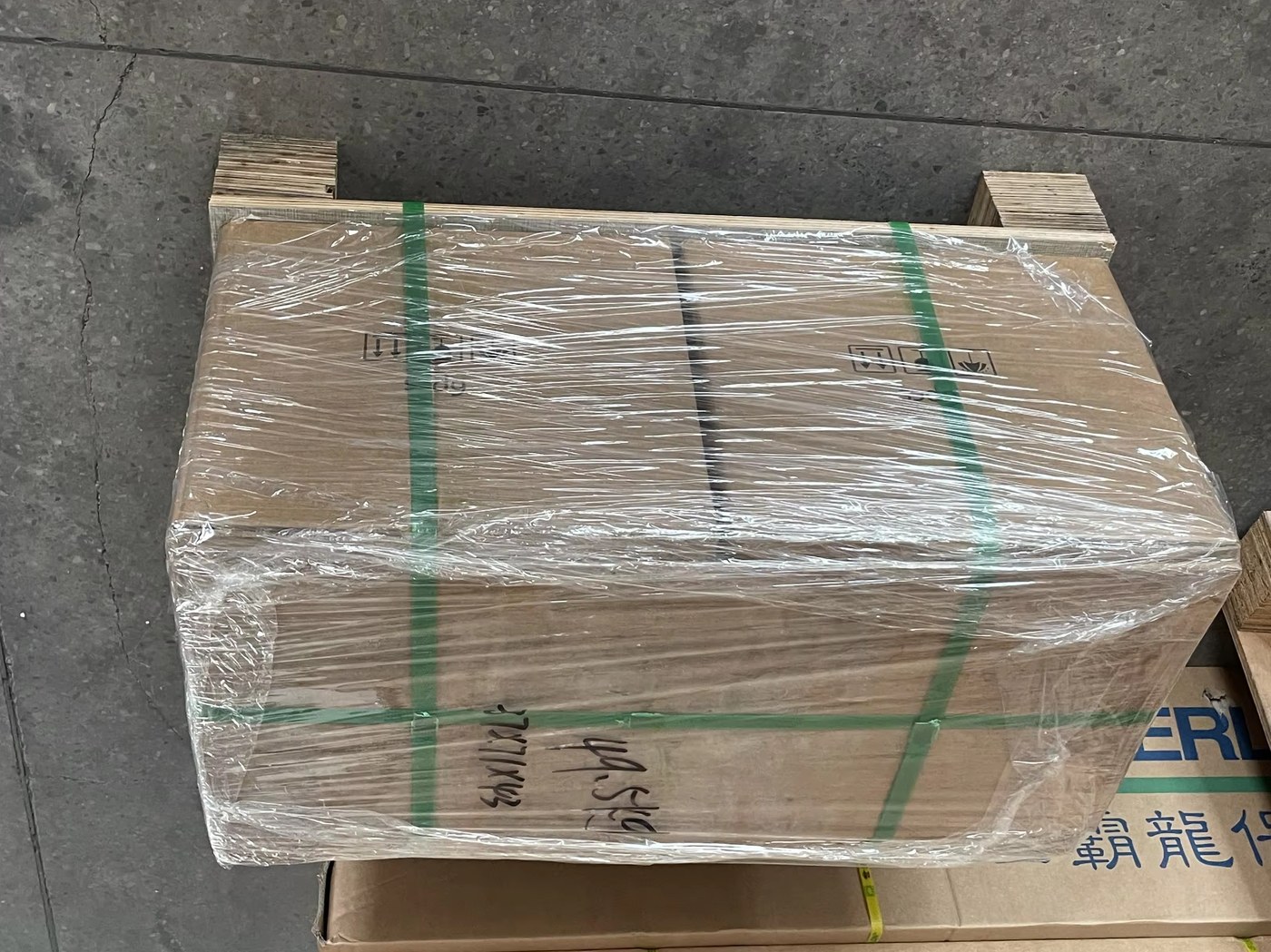
Two different groups of paperwork travel with an order, and they are needed at different points, which is where a shipment loses time.
| Document | Who asks for it | When |
|---|---|---|
| Technical data sheet | Your engineering or maintenance review | With the quotation |
| SDS (MSDS) | Your EHS file, and the carrier | With the quotation, current version |
| Certificate of analysis | Your incoming inspection | Per batch, requested at order stage |
| Certificate of origin | Customs at destination | With the shipment |
| CE declaration | Destination-dependent | With the shipment |
| Transport identification report | Freight forwarder or carrier | Before booking |
The transport identification report is the one buyers ask for latest and need earliest. It is the document that lets a forwarder accept a chemical goods booking, so a shipment can be ready and still not move while it is being issued. Ask for it when the order is placed.
Fills run from 1 L bottles through 5 L cans and 20 L pails to 208 L drums, and a mixed order is allowed. Each container leaves factory-sealed, and the seal is what makes the batch record hold: a broken seal breaks the traceability chain that a repeat order is checked against.
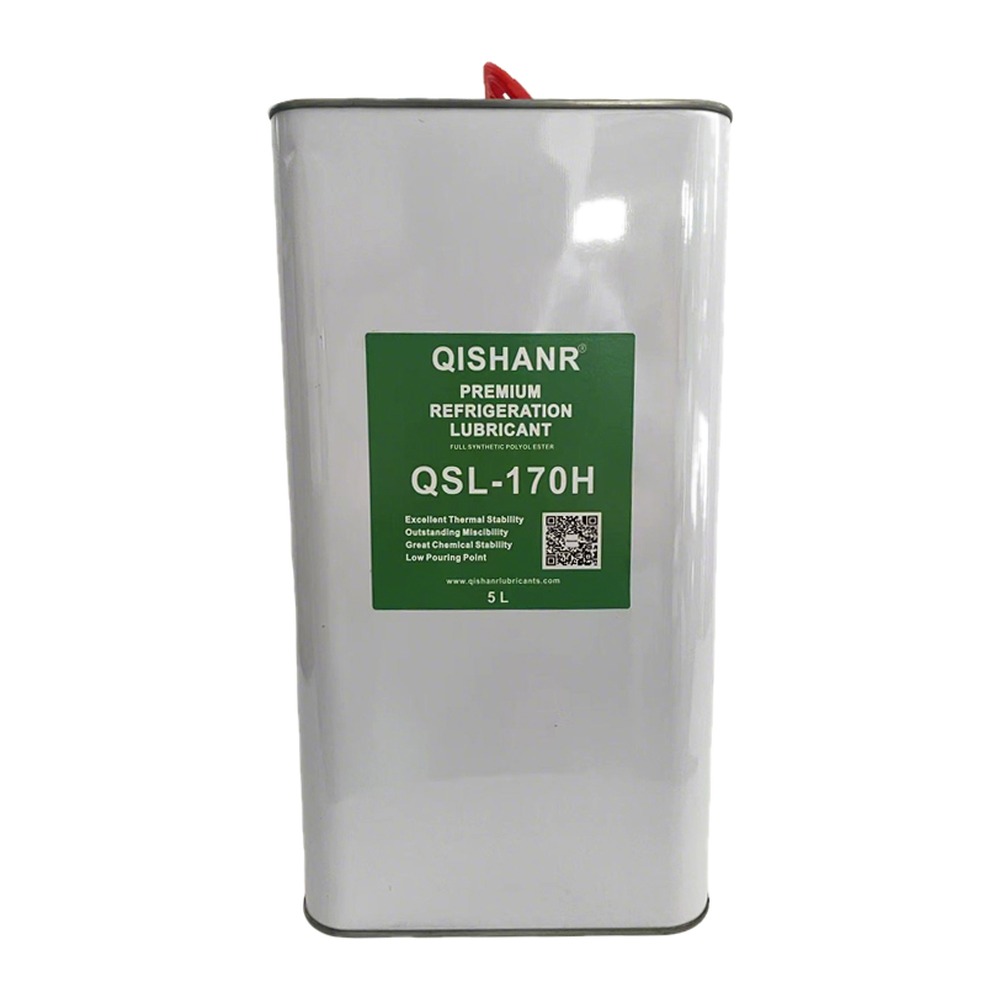
A private-label run adds three steps before printing: grade and fill stated, artwork submitted against that fill, and a first-article check on the filled and labelled container. Artwork review and pack compatibility are confirmed before anything is printed, and that confirmation is what a repeat order is placed against. The route is set out on the OEM and private label page.
Shipments have been filmed before dispatch. One customer had the pails checked and released on video before they left, which answers the question of whether the drums that landed are the drums that were ordered. That case is here.
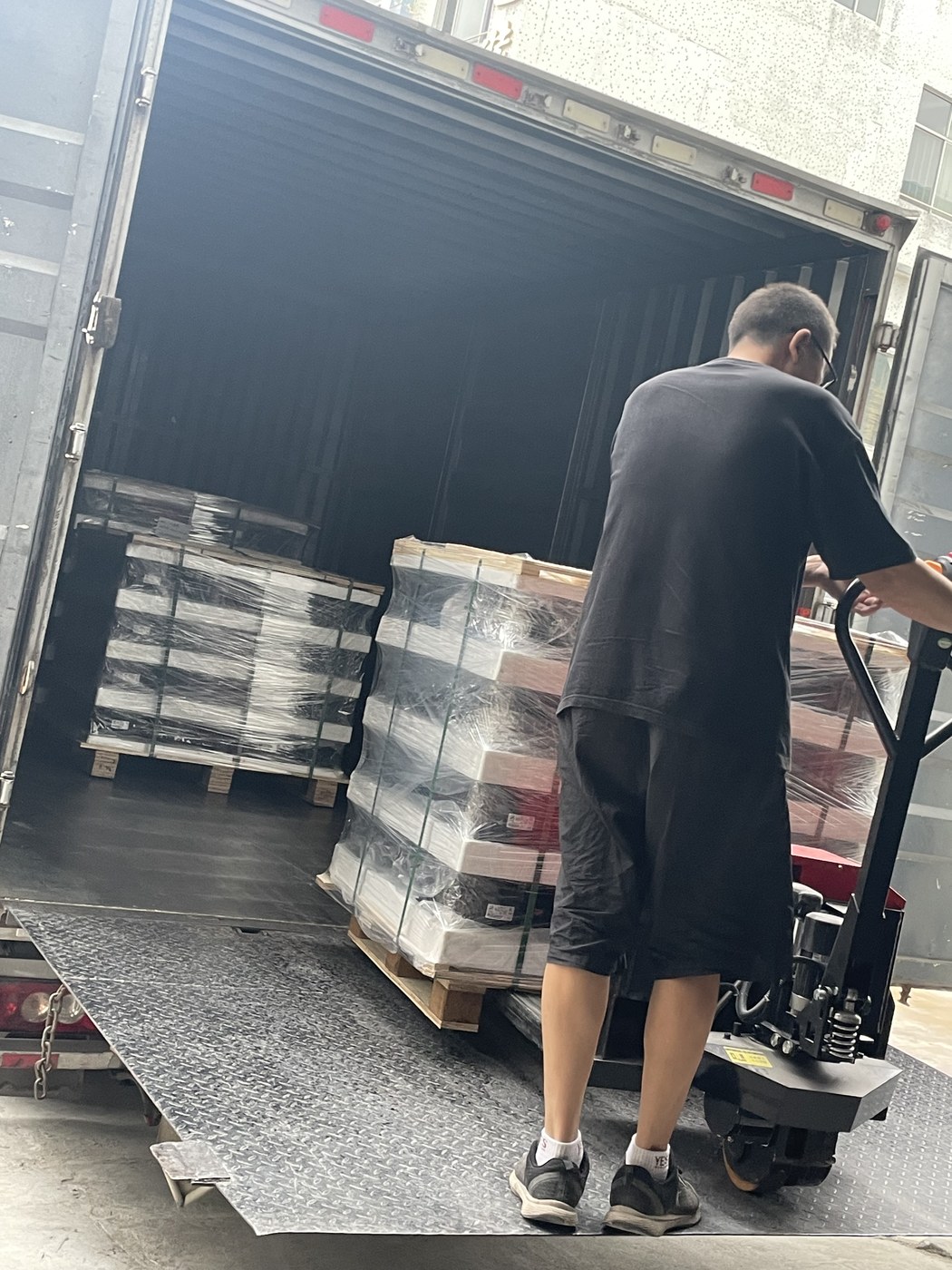
The plant sits in Foshan, adjacent to Guangzhou Port, and the port of loading for a given sailing is confirmed with the quotation. Sea freight, land transport, air freight and express are all arranged, and the shipment can end at the destination port or go door to door through our logistics network.
Emergency orders do happen. One HANBELL RC-2 went from alarm to production in under 48 hours, written up here, and that timeline depended on the model, the refrigerant and the destination arriving in the first message.
Two points account for most of the delay we see. The first is a grade named by brand rather than by machine, which sends the enquiry to the wrong product and has to come back for the right one. The second is a document requested after the booking, usually the transport identification report.
A third delay is avoidable: a mixed fill order quoted as if it were a single fill, so the pallet configuration is only settled at loading. Stating the fill mix alongside the quantity settles it earlier.
Five details: the compressor or unit model, the refrigerant, the oil in the machine now, the fill and quantity, and the destination port. A message carrying all five can be quoted in one pass; one missing them turns into a conversation.
Yes. Trial quantities and mixed fills are quoted, and LCL is available. The volume at which a shipment switches to FCL is confirmed per order rather than published.
A technical data sheet and an SDS. The certificate of analysis is per batch and is requested at order stage, and the origin, CE and transport documents are issued with the shipment.
Yes. Artwork, pack design and material selection are part of the OEM service, with a first-article check before the run.
POE covers VG10 to VG320 from our plant, PAG runs VG46 to VG320, and PVE, PAO, AB and MO have their own ranges. Send the specification or the product you are replacing and the answer is either a grade or a clear no.
Copyright & Citation Notice. This article is original content published by Qishanr Lubricants (qishanrlubricants.com). Company details, production capacity, certification, document and logistics statements are the published values from Guangzhou Qishanr Technologies Co., Ltd. Grade cross-references are those listed in the company's product documentation. Quotation of up to 200 words is permitted with attribution and a link to this page. Reproduction in full requires written permission.